9.1. Consent Forms

What is a Consent Form?
In 2007, the American Veterinary Medical Association (AVMA) clarified that “owner consent” refers to an owner’s agreement to have their animal treated. Unlike in human medicine, the doctrine of informed consent does not apply in veterinary care, since animals are legally considered property. AVMA and other organizations have worked to make this legal distinction clear.
For any service your clinic provides, you must have a signed consent form from the owner or their representative. This form confirms that they:
- Understand the procedure and its risks
- Authorize the treatment
- Release the clinic from liability
What Should Be in a Consent Form?
A comprehensive consent form should include:
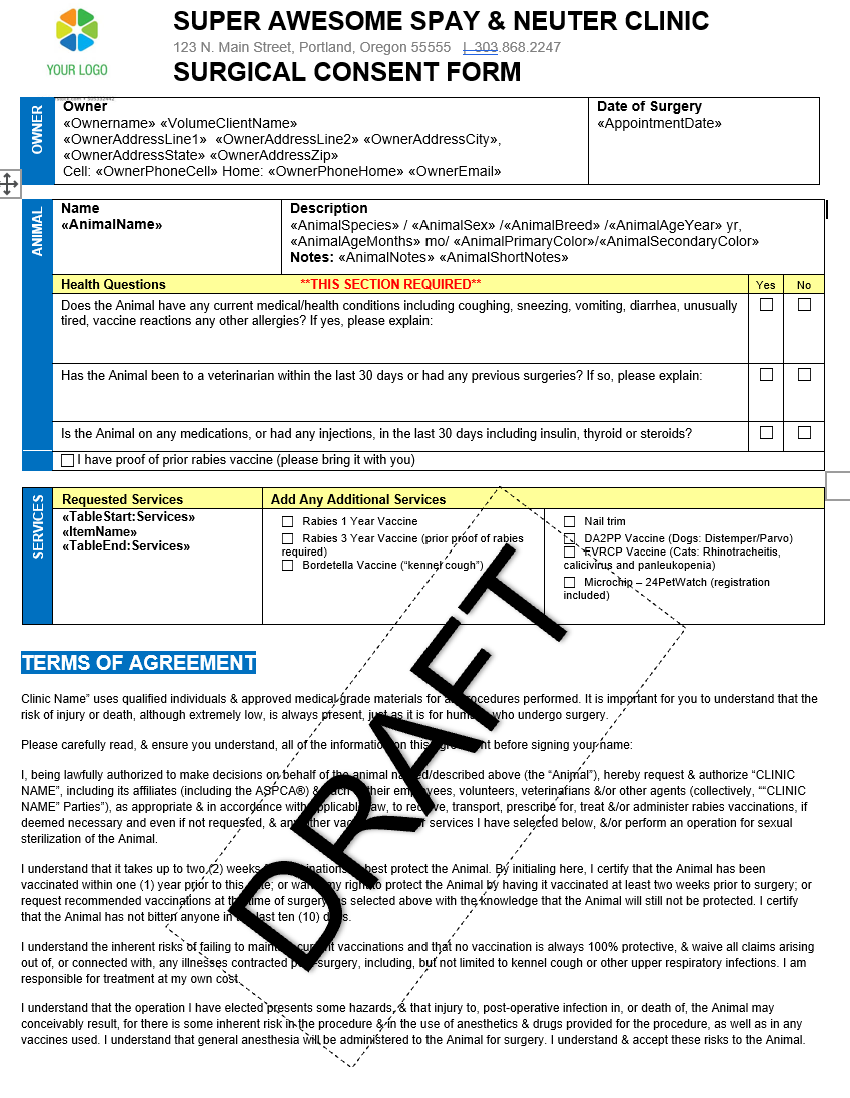
- Owner and Pet Details: Name of the owner, physical address of the pet (required in many states), and the pet’s name and description.
- Authority to Consent: Confirmation that the signer is the owner or authorized representative with decision-making rights.
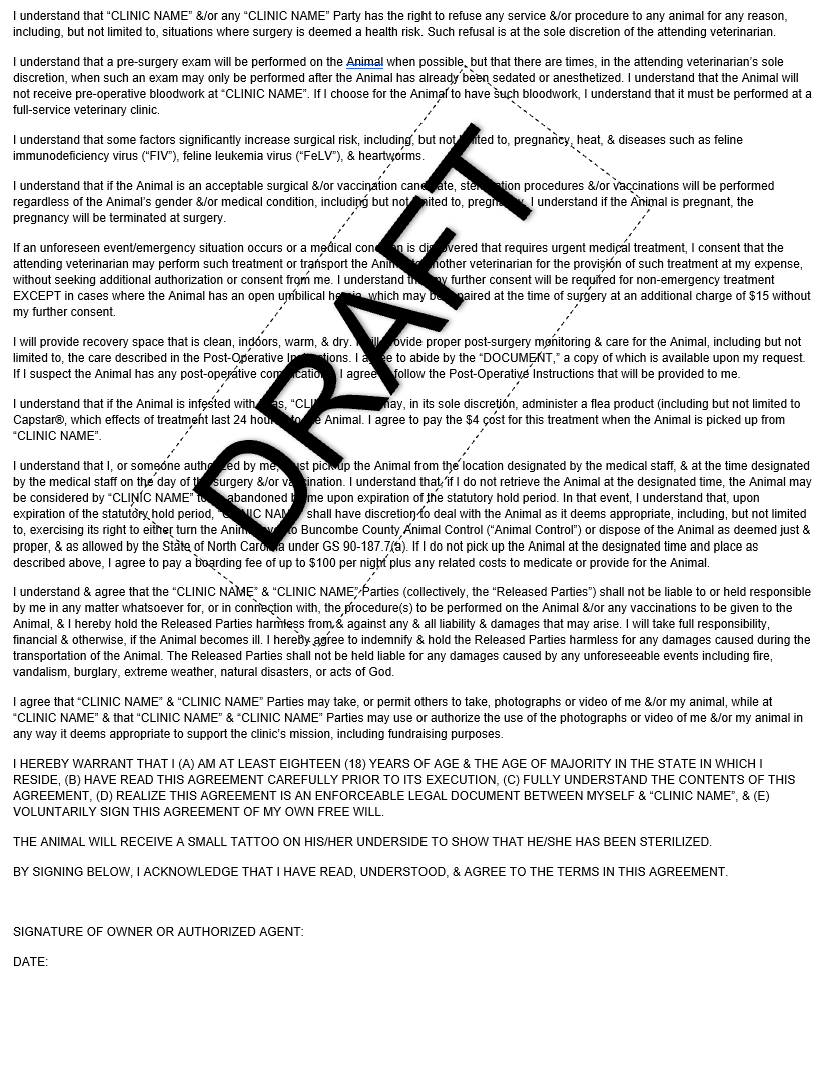
- Risk Acknowledgment: Acceptance of risks associated with anesthesia and surgery.
- Exam Limitations: A statement that a pre-surgical exam may not be possible if the pet cannot be handled.
- Services Authorized: A clear list of all services the pet will receive, along with the scheduled date.
- Unclaimed Pets: Instructions on what will happen if the owner does not pick up the animal.
- Liability Waiver: Release of the clinic from liability.
- Media Consent: Permission to photograph or video the pet and/or owner for use in social media, grant applications, or press releases.
Will Clients Pre-Sign?
Heck yes they will! Research shows that about 65% of clients will pre-sign consent forms, most often through their phones.
Templates
We’ve created consent form templates you can use. Download them and adapt to your clinic’s needs.
Here’s an example of how our draft template looks: