9.7. High Risk Waivers

A high-risk waiver is additional paperwork signed by the pet’s owner acknowledging that you’ve explained increased anesthetic or surgical risks. The owner can then either accept or decline those risks.
Waivers may be collected:
- Verbally (documented with staff/witness confirmation)
- In writing (emailed for signature)
When Are High-Risk Waivers Needed?
With hundreds of surgeries each week, some patients will present elevated anesthetic or surgical risks. Common examples include:
- Overweight or underweight animals
- Brachycephalic breeds (e.g., Bulldogs, Pugs)
- Respiratory infections, heart murmurs, or other health concerns
Clinics typically call or email owners to obtain either verbal or written consent before proceeding.
High-Risk Waivers in Clinic HQ
- Waivers are generated based on findings during the physical exam on the appointment day.
- They cannot be sent before the exam, since some risks are only detected at that time.
- Pre-existing conditions require a manual waiver.
- Certain conditions (e.g., brachycephalic breeds) can be built into the spay/neuter consent form.
- HQ automates the waiver process, allowing for both verbal consent workflows and emailed waivers.
Example: The ASPCA Spay/Neuter Alliance uses verbal waivers, though your clinic may choose to adopt this model or require a witness variation.
Canceling a High-Risk Waiver
If a waiver was created in error, you can cancel it:
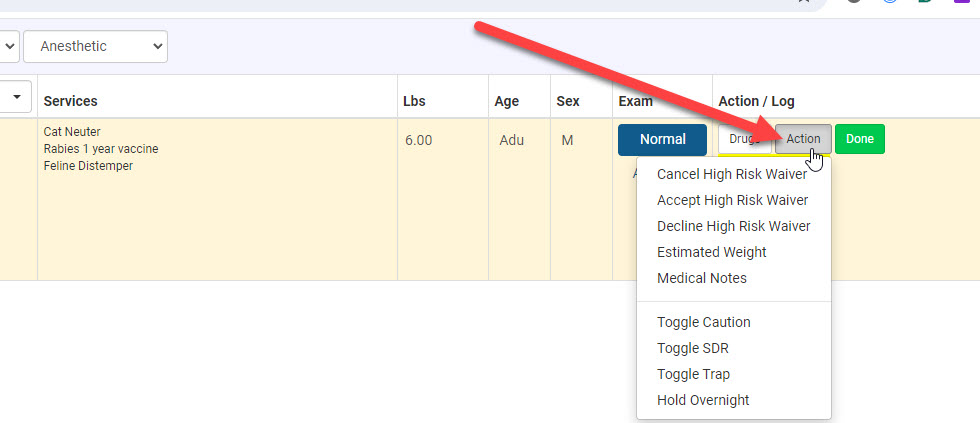
- Use the Action button in Patient Flow, or
- Update the exam record.
In either case, you’ll see the option to cancel the waiver.
Our high risk waivers can be downloaded here